
Our Office
-
Room 416, 77 Cheongam-ro, Nam-gu, Pohang, Gyeongbuk, 37673, S.Korea

Opticho’s software-based imaging platform delivers next-generation ultrasound imaging for research and clinical innovation. It supports a broad range of advanced techniques and adapts easily to diverse applications
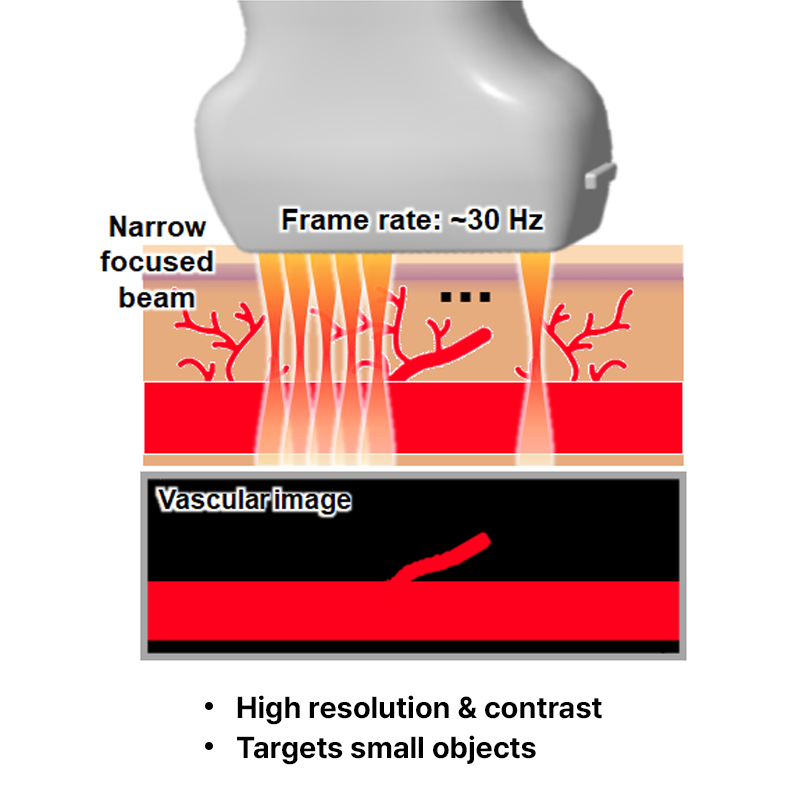
Conventional Ultrasound Imaging provides high-resolution images using focused scanline acquisition but is limited by relatively slow frame rates.
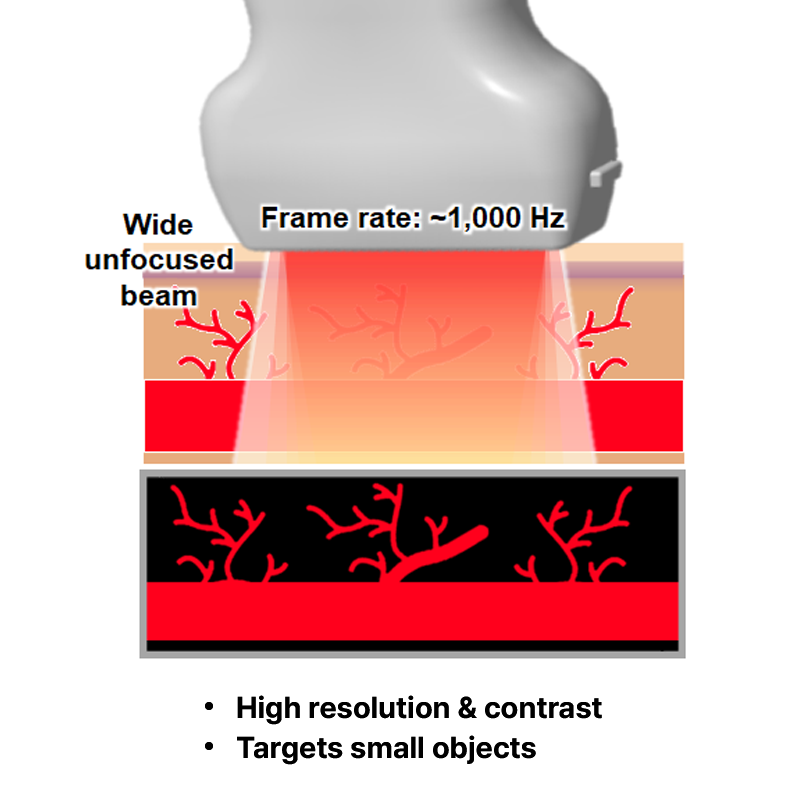
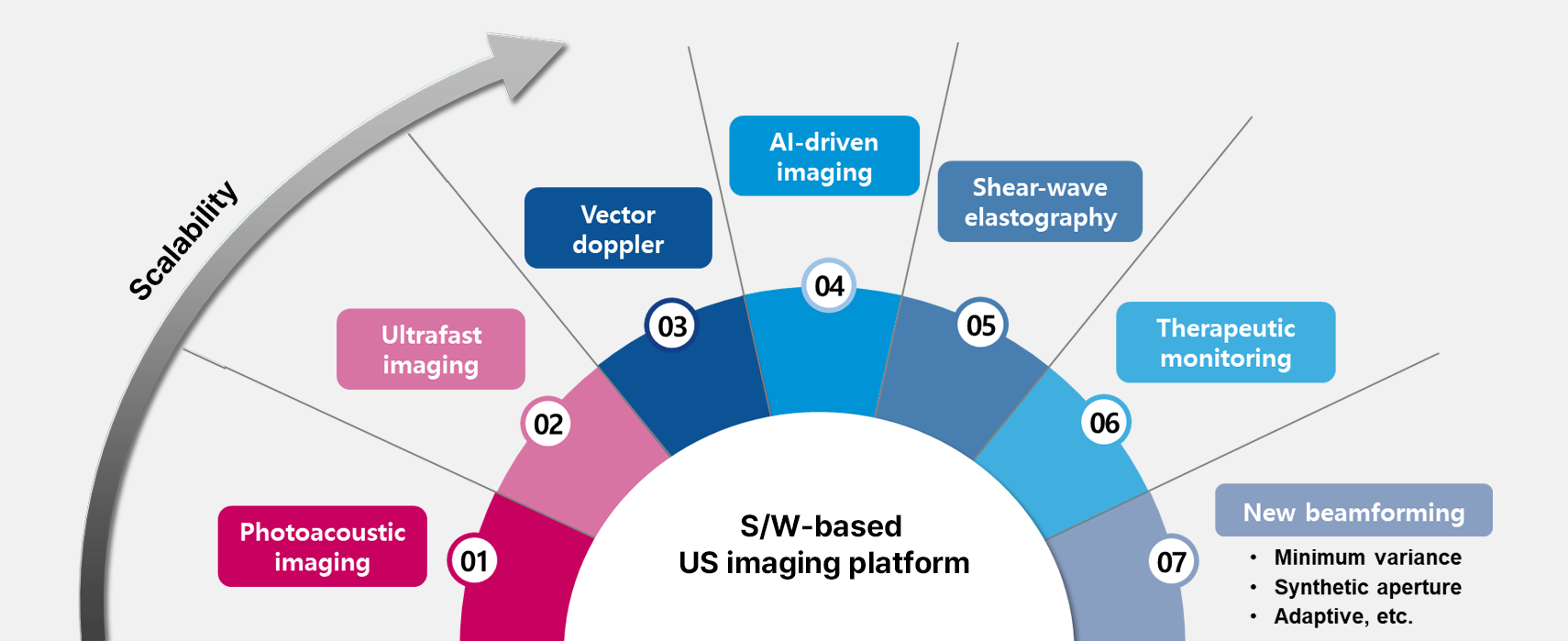
Ultrafast Doppler (UFD) leverages ultrafast plane wave imaging and parallel computing to achieve frame rates up to 1,000 Hz—enabling real-time visualization of dynamic biological processes. This allows for the detection of slow blood flow in micro vessels, which is often invisible with standard Doppler techniques.
Shear-Wave Elastography (SWE) quantifies tissue stiffness by tracking the propagation of shear waves through tissue, offering valuable insights for both clinical and research applications.
AI-Assisted Ultrasound Imaging enhances image quality, automates segmentation and analysis, and improves diagnostic efficiency—even for non-expert users.
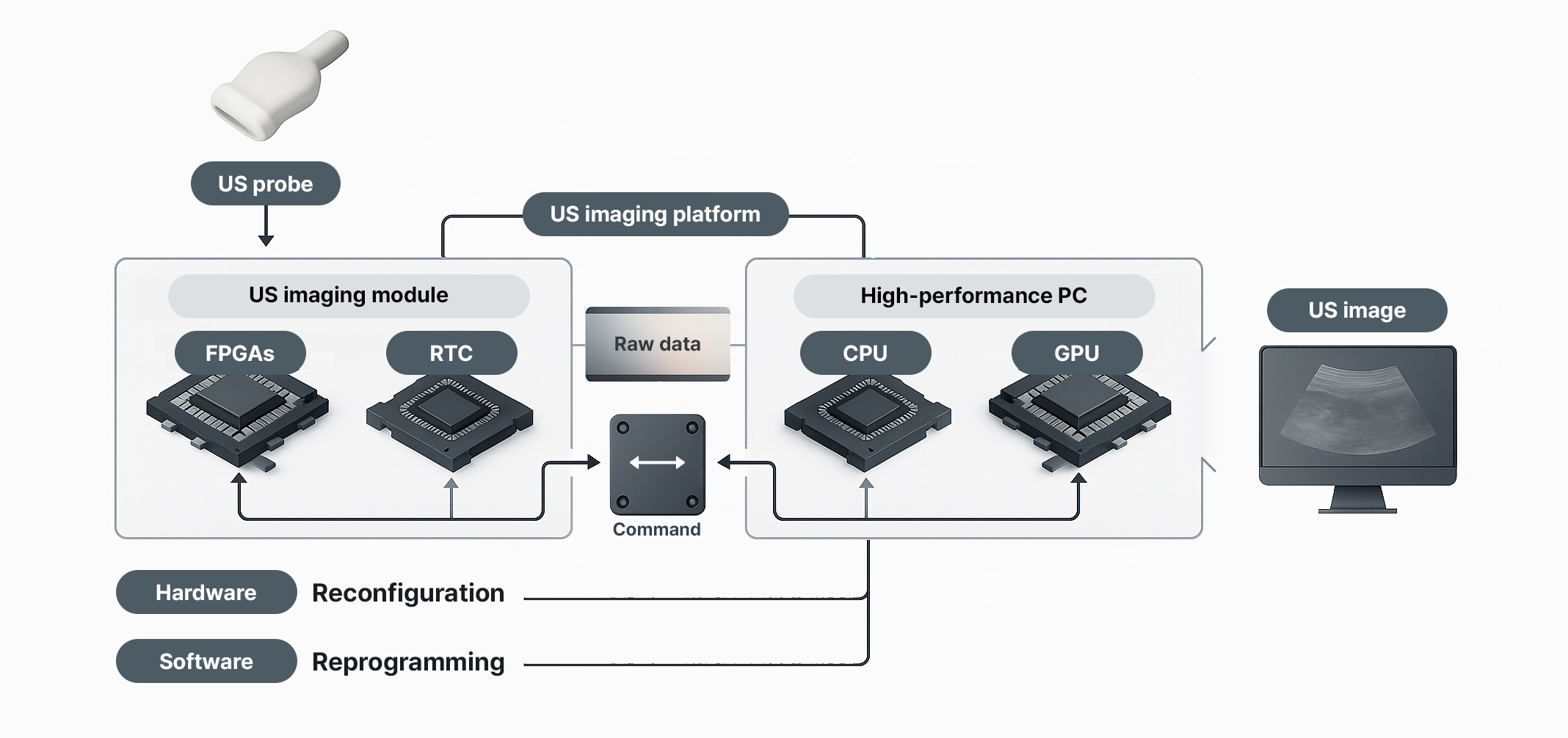
The Opticho system is designed for versatility. It accommodates multiple probe types, offers flexible signal transmission and data acquisition, and ensures high-speed PCIe data transfer. A dedicated GPU enables real-time image processing and custom algorithm development. Researchers have direct access to RF data and can accelerate new imaging methods using distributed computing across FPGAs, CPUs, and GPUs.
Advanced applications—including photoacoustic imaging, UFD, SWE, and AI-based analysis—can be added or updated through simple software upgrades, with no hardware changes required. This scalable, software-based platform empowers researchers and clinicians to push the boundaries of ultrasound imaging, adapt to emerging needs, and drive medical innovation.
Fusion of light & sound creating new value
© 2024 Opticho. All rights reserved.